
The technique
What is TIG welding?
TIG stands for Tungsten Inert Gas. An electric arc between a non-consumable tungsten electrode and the workpiece locally melts the metal. An inert shielding gas protects the weld pool. Separate filler material is introduced where needed. The process gives the welder close control of the weld pool and heat input.
The joint matters within the complete product: will the part retain its shape, will the interfaces fit and can the agreed inspection be carried out? These questions determine preparation and the welding sequence.
Suitability
When is TIG welding a suitable choice?
TIG welding can suit joints that require controlled heat input. Assessment starts with the part and its application.
Thin parts and different thicknesses
A thin part responds to heat differently from a ring or rod. The transition between them requires attention to process selection, weld length and support.
Stainless steel assemblies
For stainless steel welding, material, weld access and the required finish are considered together. The canister project used 316L stainless steel.
One-off work and series
For a series, jigs and fixed clamping positions help repeat the same assembly. The function of the joint remains the starting point for each workpiece.
Share your drawing, material, quantities, application and critical interfaces. These form the basis for selecting the welding route.
Process and approach
From design to a TIG-welded assembly
Engineering, welding preparation and final inspection are organised together.
In the canister project, Douna checked every assembly for dimensions, welds and finish. Dedicated fixtures and the selected welding sequence support the fit between basket and lid.
For a new order, joint requirements, any inspections and the necessary documentation are agreed beforehand. A standard, certificate or additional examination method applies only within the confirmed scope of the order.
Assess the design and joint
Review material, geometry, weld positions and product function. Identify critical dimensions and interfaces beforehand.
Determine fixturing and welding sequence
Prepare support and access. Match heat input and welding sequence to material thicknesses and the risk of distortion.
Weld, assemble and inspect
Carry out the agreed welding route and check the assembly against the specified requirements. Agree any additional inspections and documentation in advance.
Technical considerations
Fine mesh may require a different welding process
TIG welding is not automatically the choice for every part of an assembly. The canister project makes this distinction tangible.
TIG welding the frame
The rings and rods were joined with low-current, short TIG welds. A sound joint is needed here without building up unnecessary heat.
Spot welding the mesh
The fine mesh was spot welded to keep the heat local. This limits burn-through and distortion. This project demonstrates the combination of processes.
In practice
Thin-mesh stainless steel canisters for petrochemicals
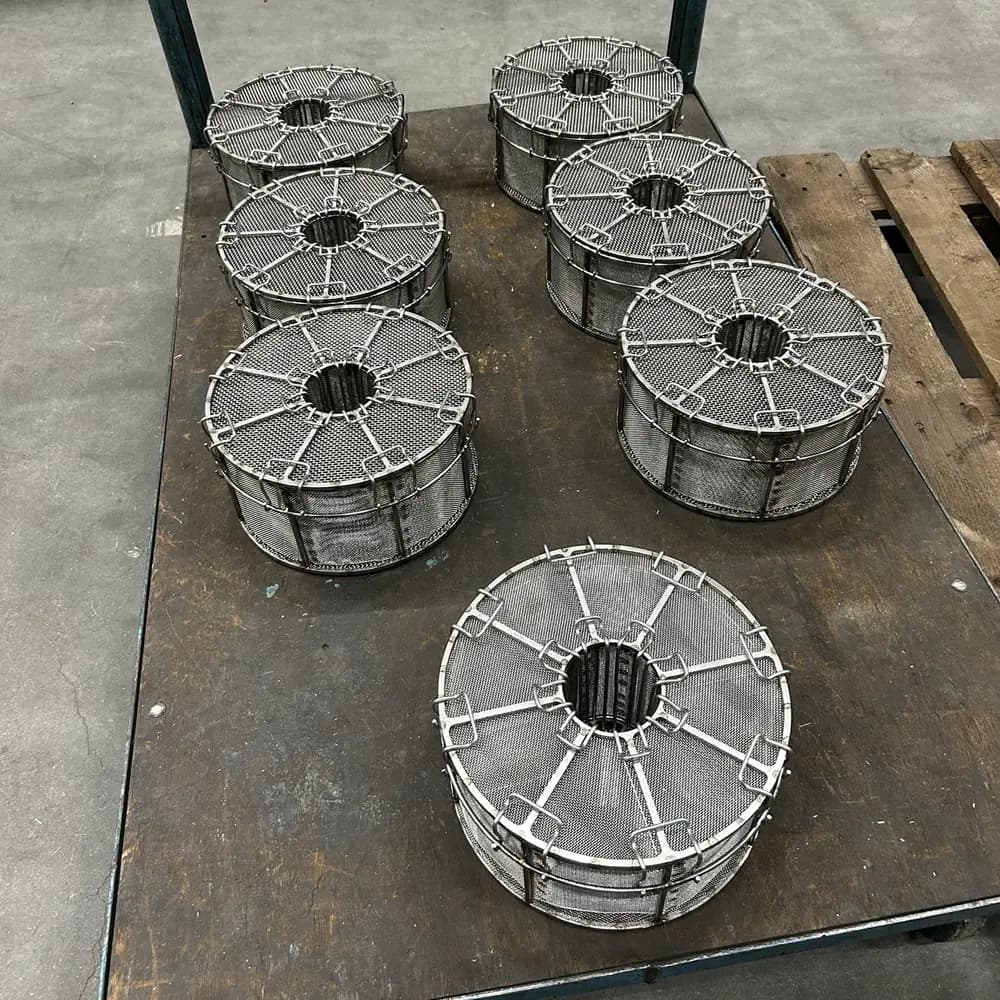
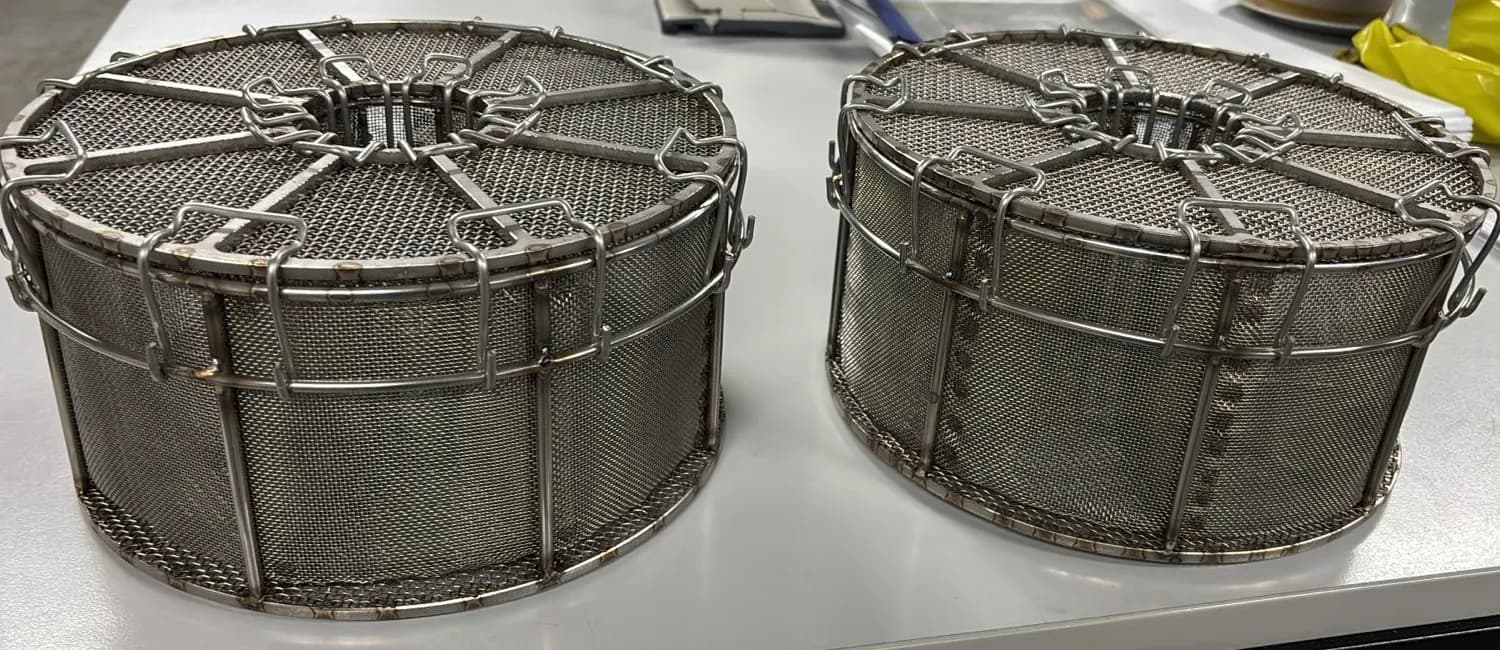
Combining fine stainless steel mesh and a rigid frame in one canister. For this 316L stainless steel series, Douna used TIG welding, spot welding and purpose-made fixtures.
Douna manufactured a series of special canisters for a customer in the petrochemical industry. What initially look like simple baskets are assemblies of fine stainless steel mesh, rings, rods, spokes and fastening clips. The difference in material thickness makes the joints central to the work.
Supports solutions
Part of a complete solution
The required outcome determines which capabilities are needed. This capability is only used where it demonstrably supports the solution.
Machine building and assembly from a design or functional requirement. Discuss the module or machine, inspection and delivery with Douna.
Mechanical engineering for components and machine building. Discuss function, design, manufacturability and coordination with production and assembly.
Custom metalworking for components and assemblies. Discuss which combination of machining, welding, assembly and inspection suits your product with Douna.
Douna Machinery connects engineering, production, assembly and inspection for your agreed manufacturing project. Discuss scope and delivery.
Related content
Explore this technique further
Frequently asked questions
Frequently asked questions about TIG welding
How does TIG welding differ from MIG/MAG welding?
TIG uses a non-consumable tungsten electrode to form the arc, with filler material introduced separately if needed. MIG/MAG uses continuously fed consumable wire. The choice depends on factors including material, thickness, joint and the required execution.
Can fine stainless steel mesh be TIG welded?
The mesh and the joint need to be assessed. In the canister project, the frame was TIG welded and the fine mesh attached by spot welding. The difference in thickness called for a combination of processes.
What determines the cost of TIG welding?
Material, geometry, access, quantities, preparation, fixturing and required inspection together determine the work. A drawing and application details allow Douna to assess the manufacturing route and prepare a suitable quotation.
What information does Douna need for an enquiry?
Share the application, a current drawing or model reference, material, quantities and critical dimensions. Include the required finish, schedule and any inspection or documentation requirements. Use Contact to discuss how technical files can be supplied.