Components in production lines work hard. They are loaded, heated and cooled every day. Over time, this leaves its mark: a press platen that is no longer flat, a guide surface with wear marks or a casting with corrosion or a damaged mating surface.
Replacement can be expensive and involve a long lead time. Where the technical condition allows, refurbishment can be a faster and more economical way to bring a component back within the agreed specification.
Restoring flatness to heated press platens
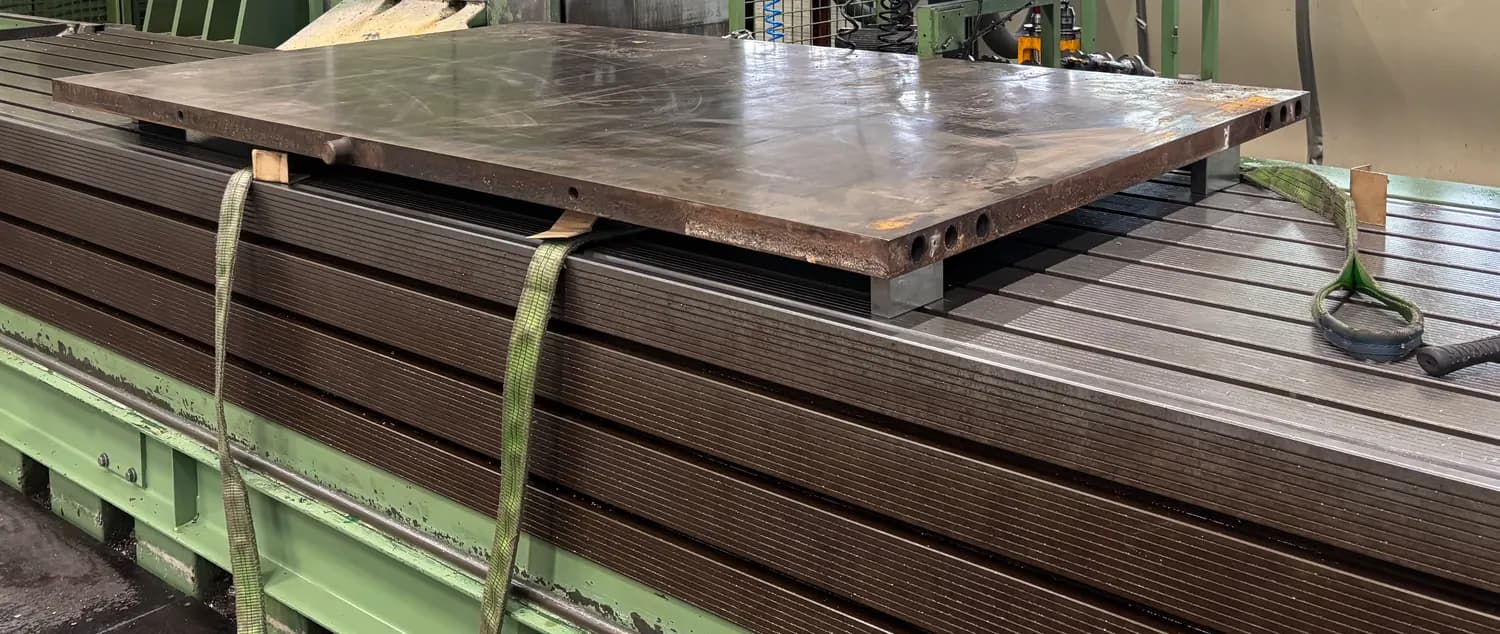
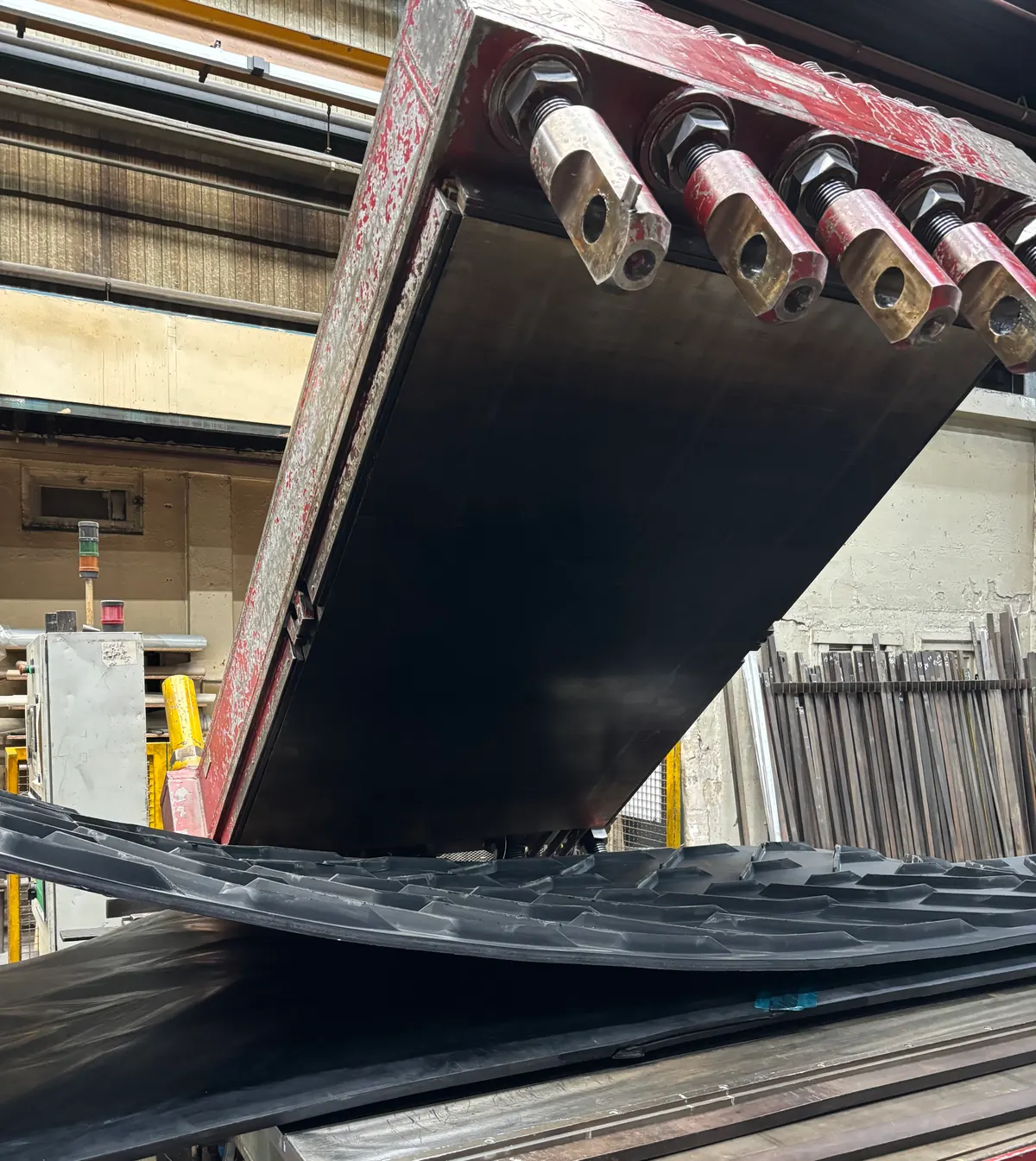
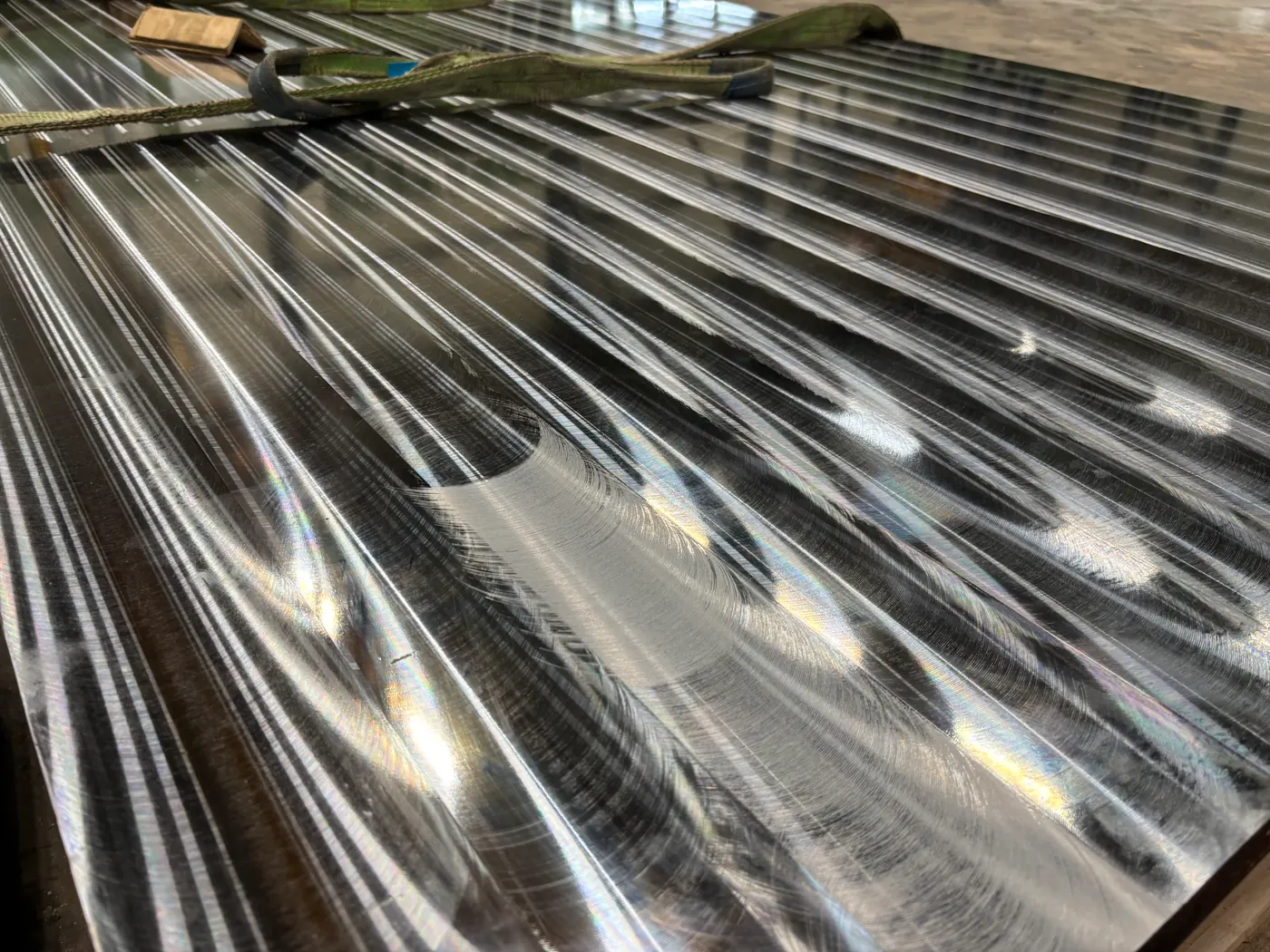
The photographs show platens from a vulcanising press. This type of press forms rubber products under high pressure and temperature. The platens are heated through channels running through the material.
Repeated heating, pressing and cooling cycles can cause a platen to distort over the years. As flatness deteriorates, pressure may be distributed unevenly over the product, which can affect product quality.
Our approach
We clamped the platens on our large milling machine and re-machined the surface. This refurbishment involves more than face milling alone: the initial condition, workholding and remaining plate thickness determine the machining approach.
Residual stresses in the material
A plate exposed to thermal loading for years may contain residual stresses. Removing material from one side can cause further distortion. Where necessary, we therefore machine both sides and measure between the steps.
Removing as little material as possible
Every tenth of a millimetre removed reduces the thickness. For press platens, this can affect the shut height of the press and the distance to the heating channels. We measure the distortion beforehand and determine the minimum amount of material that needs to be removed.
Workholding without distortion
A warped plate forced flat against the machine table may spring back after release. Supporting and clamping it without introducing additional distortion are therefore critical to the result.
Steel, stainless steel and aluminium
We refurbish components in steel, stainless steel and aluminium. Alongside face milling, we can use turning and drilling and, where necessary, coordinate subcontracted grinding to restore a component to size.
Restoring forgings and castings
Heavy forgings and castings, for example from infrastructure or the process industry, may also be suitable for repair. Where material has been lost through wear or corrosion, the surface can be built up by weld deposition where technically appropriate. A cladding layer can be applied where additional protection is required. We then machine the component back to the agreed dimensions. The material, condition and application determine the suitable repair route.
Inspection and handover
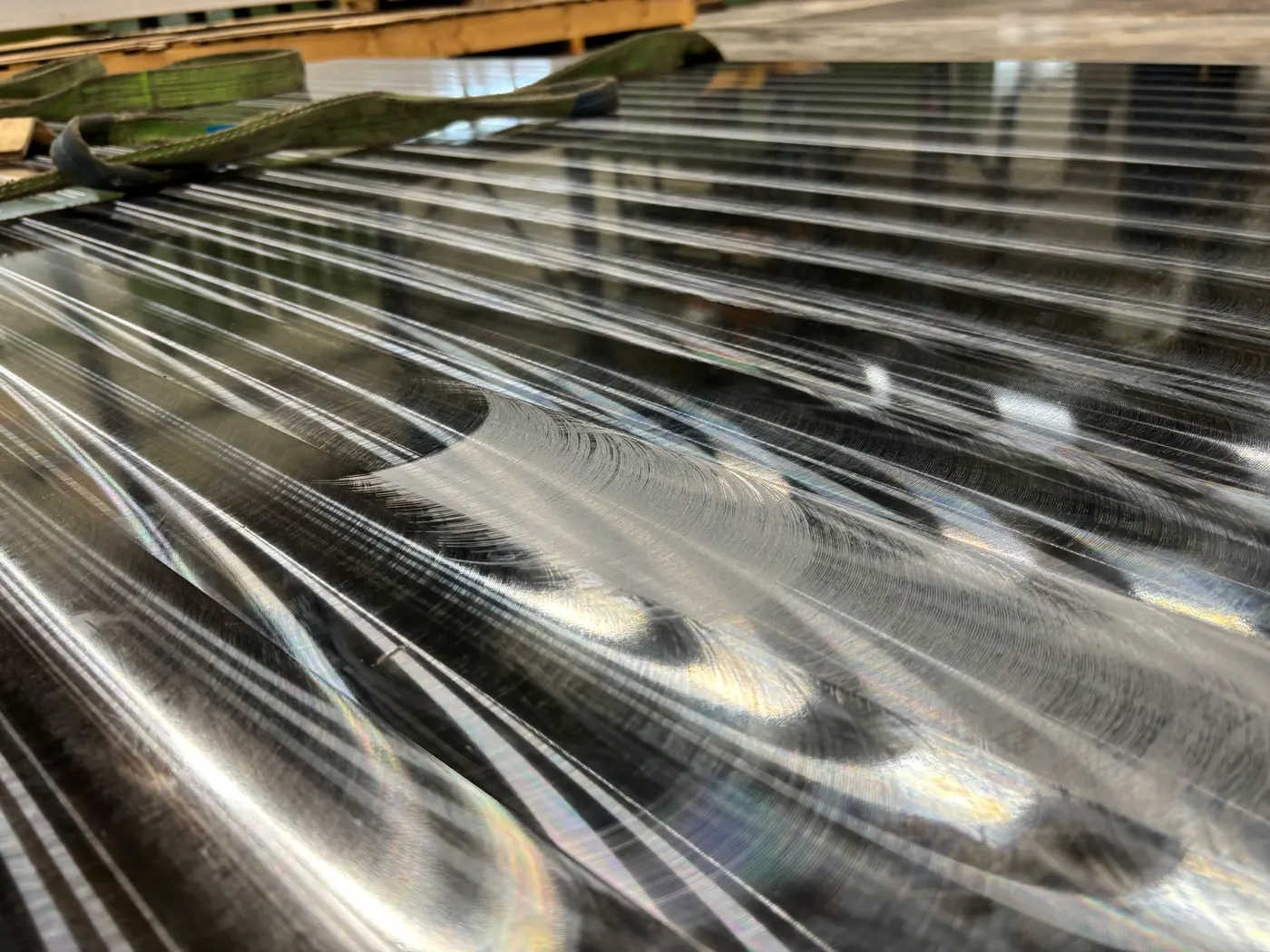
The supplied drawing defines the requirements for flatness and surface roughness. Measuring before and between machining steps helps control material removal and any distortion.
Delivered work
The press platens were re-machined to bring flatness and surface roughness back within the drawing requirements.
Do you have a component that no longer meets its specification? Contact Douna with a photograph, the drawing and the required tolerance. We can then assess whether refurbishment is possible.