Technical article
When is vertical turning suitable for a large workpiece?
Vertical turning suits large, heavy, rotationally symmetrical workpieces when stable support, accessibility and controlled workholding are central considerations.
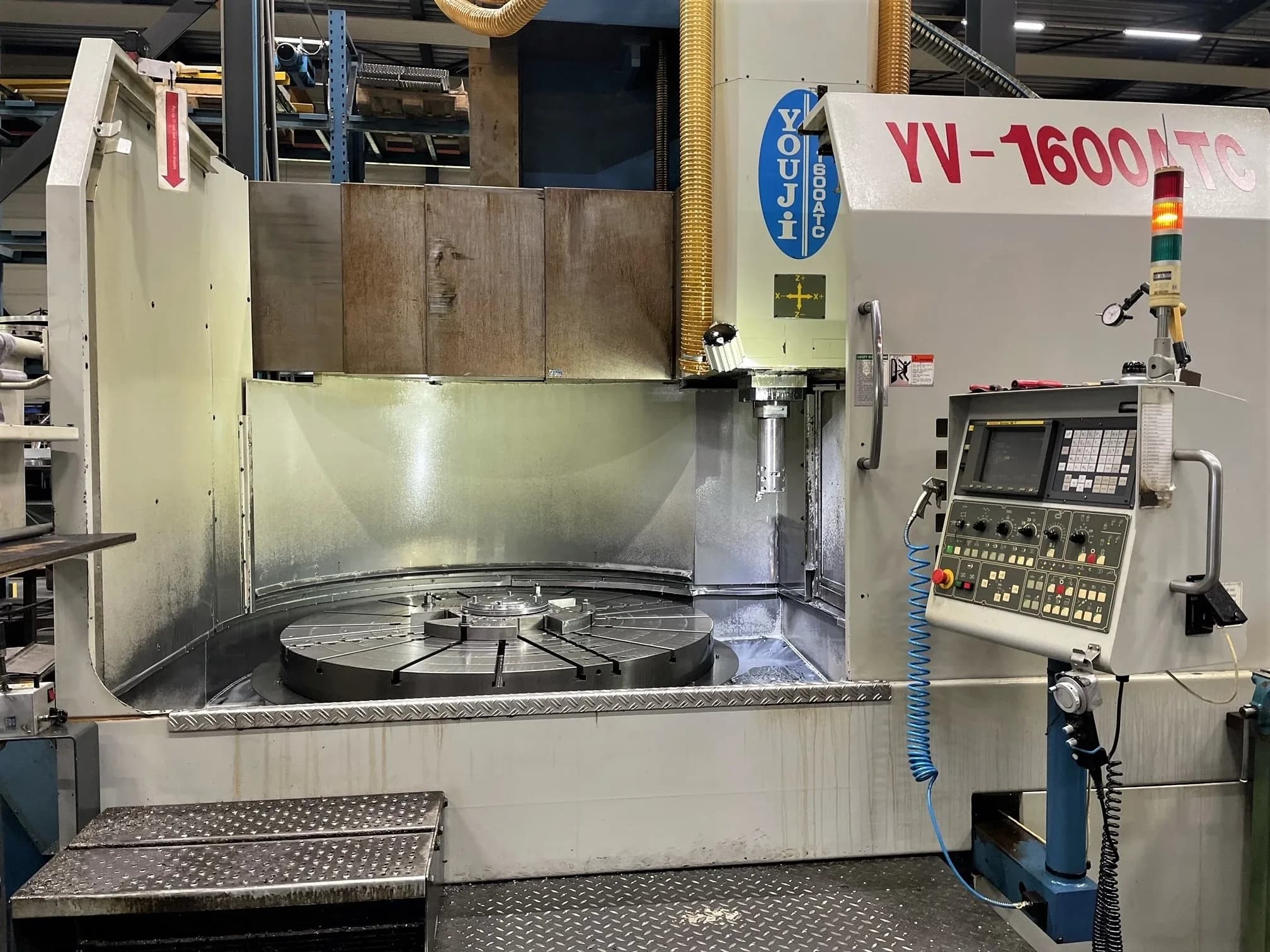
The choice between horizontal and vertical turning does not depend on diameter or weight alone. Geometry, centre of gravity, workholding, operations and subsequent steps together determine which machine arrangement makes sense.
Direct answer
Suitable when vertical support helps with workholding
In vertical turning, the workpiece rests on a horizontal rotary table. This arrangement can suit rotationally symmetrical parts whose geometry, mass or centre of gravity makes horizontal clamping difficult.
Vertical support does not replace technical assessment. The clamping surface, load, clear tool path, critical features and subsequent steps must be assessed individually for every workpiece.
Technical example: a ring-shaped workpiece
The shape and centre of gravity of a ring-shaped workpiece may benefit from support on a horizontal table. The accessibility of internal and external diameters, faces and any additional operations then determines whether the arrangement is technically appropriate.
Workpiece data and machine limits determine whether this arrangement suits the component.
Assess the complete production and inspection route
The choice of a vertical turning operation is connected to other operations and inspections. Required faces, holes, finishing, measurement and any assembly determine which transfers are needed along the route.
A suitable machine choice therefore follows the complete geometry and agreed delivery, rather than a single diameter or mass.
What information is needed for an initial assessment?
The key starting points are external dimensions, mass, clamping surface, material, initial shape, critical diameters and faces, tolerances and required subsequent processes. See the machine detail page for machine specifications.