
Technical article
Which factors determine how a forging is machined?
Initial shape, mill scale, material behaviour, workholding, machining sequence and tolerances together determine how a forging is brought to its final dimensions in a controlled way.
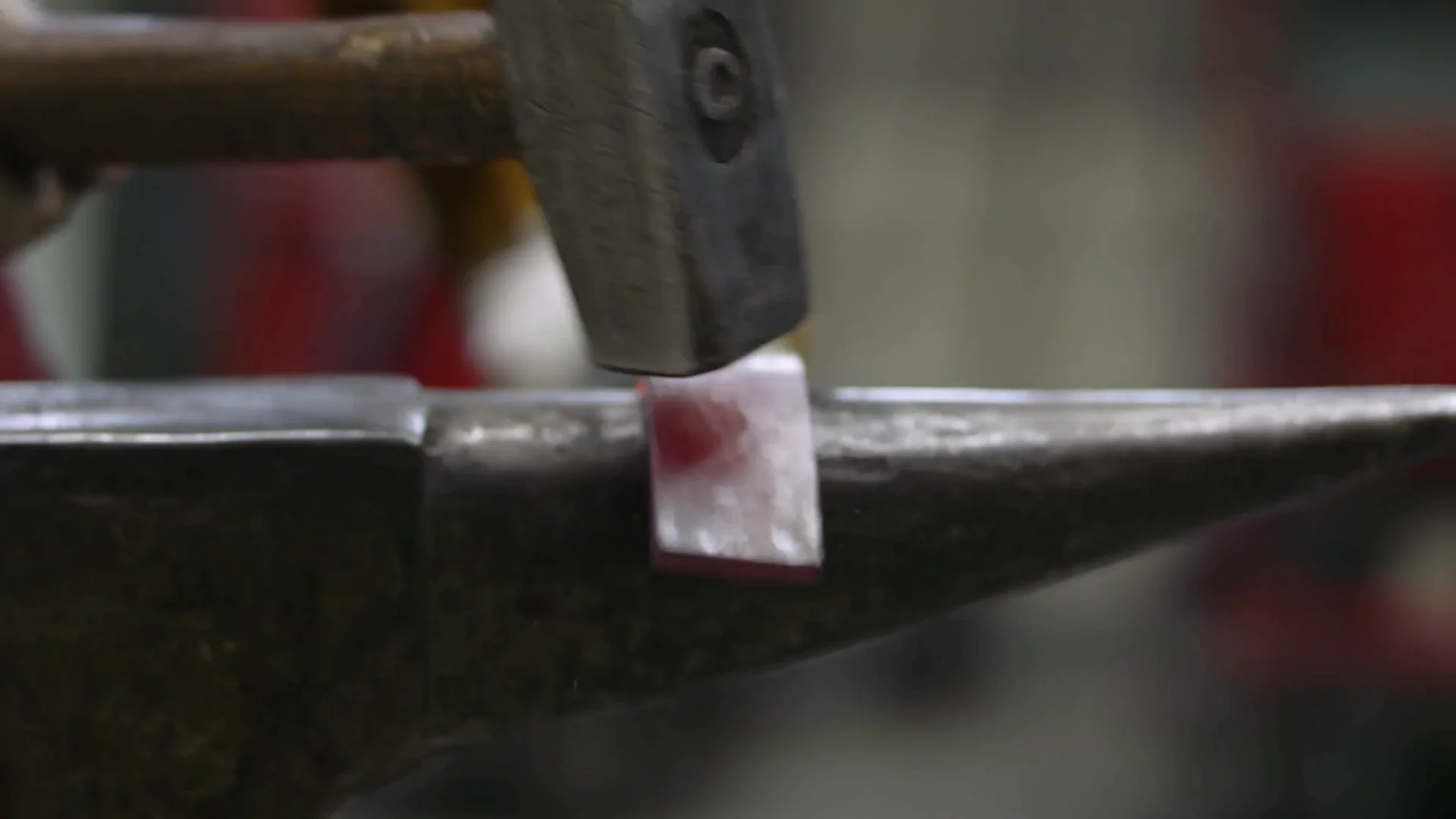
A raw forging is not a uniform starting material. The production route must account for the condition of the workpiece and the functional requirements of the finished component.
Direct answer
The route follows from initial shape, material behaviour and final function
The machining route for a forging is determined by its actual initial shape, available machining allowance, material behaviour, workholding options and functional final dimensions. None of these factors can be assessed in isolation.
The route therefore begins by comparing the raw part with the final geometry. This reveals where a reliable reference surface is needed, which operations are decisive and where intermediate inspection or adjusted workholding may be necessary.
Technical example: establish a stable reference surface first
On a raw forging, mill scale, shape deviations and varying machining allowances can make direct clamping on a functional final surface unreliable. An initial operation may then create a stable reference for the next setup.
The suitable side follows from the actual geometry, accessibility and critical final dimensions. This example describes the considerations; it does not prescribe a fixed machining sequence for every forging.
Machining sequence and workholding belong together
Turning, milling, drilling and boring can be combined in one route. Their sequence must suit the material behaviour, the accessibility of surfaces and holes, and the tolerances that are decisive at the end.
Subsequent steps such as heat treatment, welding, measurement, preservation or assembly also influence which operation makes sense at which stage.
What information is needed for the initial assessment?
For an initial manufacturability assessment, the raw dimensions, material designation, final geometry, critical tolerances, any heat treatment and required delivery condition are relevant starting points. They allow the route to be assessed before costly operations begin.