Technical article
CNC machining: what is it and how does it work?
What is CNC machining, and how does a drawing become a component? Read about milling, turning, material selection, workholding, costs and dimensional inspection.
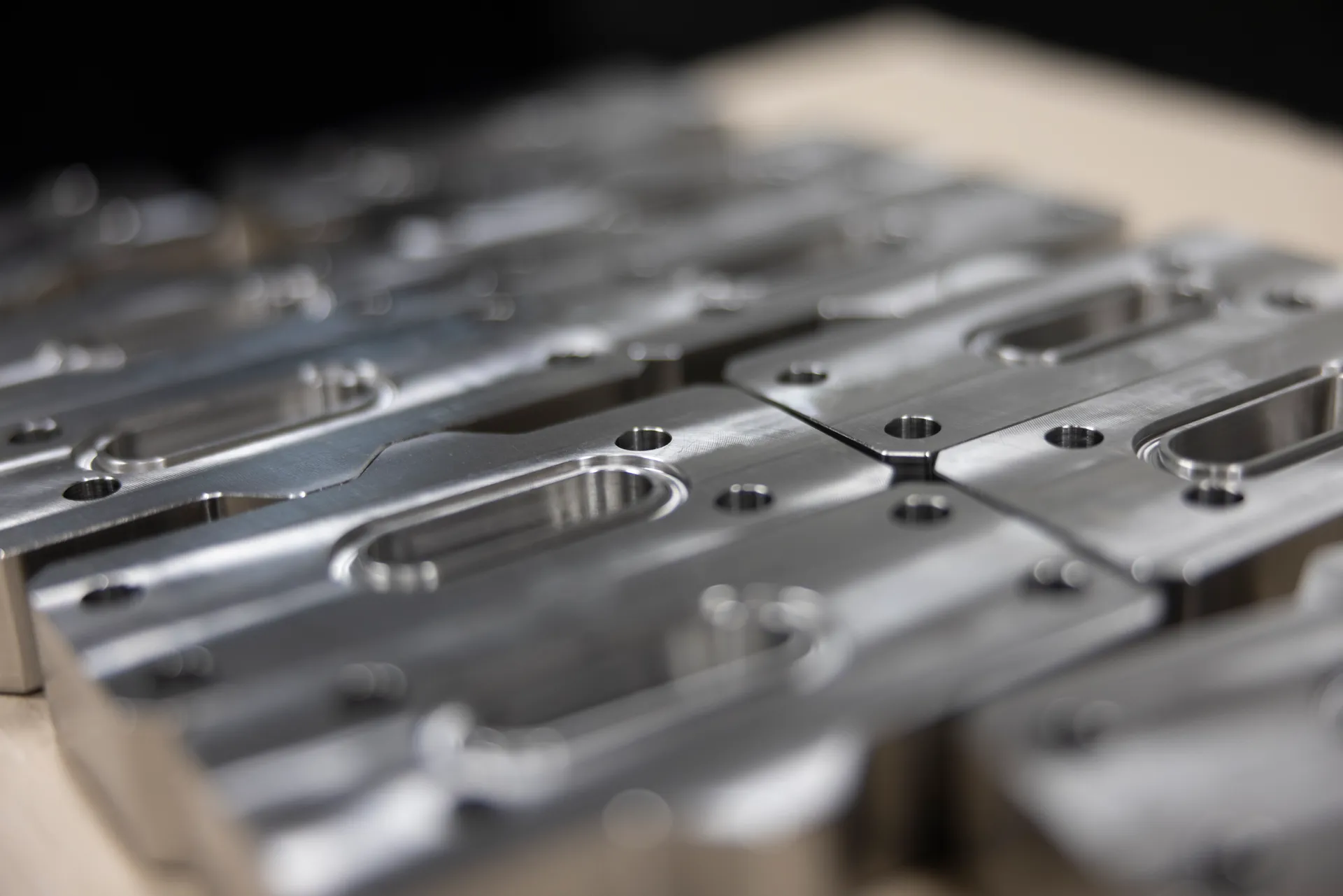
A digital design describes what a component should look like. Making it also requires decisions about material, tools, workholding and inspection. CNC machining connects that preparation with the operations on the machine. What happens between the drawing and the finished part?
Direct answer
What is CNC machining?
CNC machining removes material using a computer-controlled machine. A cutting tool removes material from a workpiece until the required shape is produced, generating chips in the process. CNC stands for Computer Numerical Control: the control system follows programmed instructions for the machine movements.
CNC machining is an umbrella term for processes such as milling and turning. The choice of operation depends on the component's shape, material and requirements. Computer control does not replace technical preparation and inspection.
What is the difference between CNC milling and CNC turning?
In CNC milling, the cutting tool rotates to machine features such as faces, pockets and contours. In typical CNC turning operations, the workpiece rotates around its axis while a tool removes material. Turning therefore suits round forms, such as shafts and bushes.
A component may require both operations. Consider a round part with flat mounting faces or holes away from its centreline. The complete geometry determines which operations need to follow one another; the outer shape alone is not enough to select a manufacturing route.
From design to machine program
Preparation defines the operations, tools and machining sequence. CAM software can use a digital model to prepare toolpaths and translate them into instructions for a particular machine. Depending on the task, programming can also take place directly at the machine.
The starting material, workpiece position and workholding are part of this preparation too. A model alone does not define every manufacturing agreement. The current drawing and agreed requirements remain necessary to establish what the delivered component must meet.
What role do drawings and tolerances play?
A component must fit and function within its assembly. Identify which dimensions, holes and mounting faces are critical. Define their relative positions and the datums used to assess them. The model and drawing must describe the same design revision.
A tight tolerance on every surface is not an objective in itself. Functional requirements determine where accuracy is needed. Achievable tolerances require an assessment of the specific component, material, workholding and measurement method.
Material and workholding help determine the approach
Specify the exact material grade and its supplied condition. Bar, plate, castings and forgings require different preparation. It must also be clear where material will be removed and which areas will continue to support the part during machining.
Workholding secures the component while providing access to the surfaces being machined. When a part is re-clamped, the relationships between important features must be maintained. Thin walls and long projecting sections need attention; a suitable approach follows from the complete geometry.
How is the result inspected?
Completing a CNC program does not prove that every product requirement has been met. Agree which features will be measured, by which method and at what stage. Some features become harder to access after a subsequent operation or assembly and need earlier inspection.
The measurement method must suit the feature and its specified tolerance. Measurement conditions and uncertainty also matter. Define the results or reporting required at handover so that manufacturing and inspection address the same requirements.
What determines the cost of CNC machining?
Costs relate to material, preparation, programming, tools, setups, machining time and inspection. Quantities and subsequent operations also contribute. One-off preparation affects the unit cost differently for a single component than for a production batch.
Compare enquiries on the same basis: drawing revision, material, quantities, final condition and inspection. A machine hourly rate alone says little about the complete order. Discuss any missing information before fixing a price and schedule.
What information helps when outsourcing CNC machining?
A useful enquiry includes a current drawing, a model if available, material selection and the required quantity. Describe the component's function and mark its critical features. Also specify the required finish, any assembly and necessary inspection documentation.
State whether the requirement is a prototype, a one-off component or repeat work. If product information is missing, identify what still needs development. A sketch or existing component can start a discussion, but does not yet constitute a complete manufacturing dossier.
CNC machining at Douna Machinery
Douna assesses geometry, material, workholding and dimensional inspection in relation to your component's function. The CNC machining page provides the overall context, while the CNC milling and CNC turning pages explore the individual operations further.
Available product information and the required handover provide the starting point for a technical discussion. Suitable operations, specific material suitability, tolerances and inspection are assessed for each enquiry.